AWS KMS
この機能は、Business Critical(SaaS)および BYOC デプロイでのみ使用できます。
この機能は AWS で使用できます。Google Cloud と Microsoft Azure では使用できません。
AWS Key Management Service(KMS)は、データの暗号化と署名に使用するキーを簡単に作成および管理できる AWS マネージドサービスです。
概要
通常のケースでは、Zilliz Cloud クラスター内のデータを暗号化するために KMS キーは使用しません。代わりに、KMS キーを使用して暗号化ゾーンキー(EZK)を暗号化し、EZK を使用してデータ暗号化キー(DEK)を暗号化し、DEK を使用してデータを暗号化します。
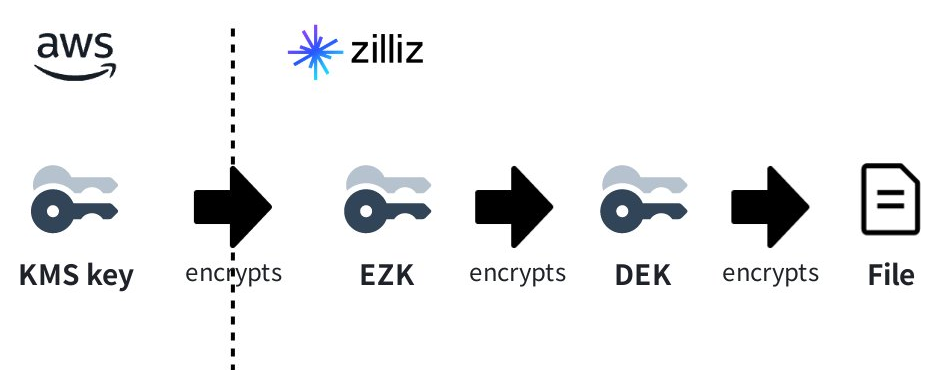
暗号化の仕組みとその適用範囲の詳細については、このセクション を参照してください。CMEK 機能の制限事項の詳細については、このセクション を参照してください。CMEK 機能を使用するには、このページの手順に従ってください。
事前準備
-
AWS CLI をインストールしているか、AWS CloudShell にアクセスできること。
詳細については、このページ を参照してください。
-
キー管理コマンドを実行するための十分な権限があること。
KMS キーを追加する
各プロジェクトでは、KMS プロバイダーに関係なく、最大 20 個のキーを追加できます。既存の KMS キーを追加するか、Zilliz Cloud コンソールの指示に従って KMS キーを作成し、Zilliz Cloud に追加することができます。
手順
AWS KMS キーを追加するには、Zilliz Cloud コンソール にログインし、左側のナビゲーションペインで Network > CMEK を選択し、該当する AWS リージョンにある Business Critical プロジェクトのいずれかに移動して、+ CMEK をクリックし、Add CMEK (AWS KMS) ダイアログボックスの手順に従ってプロセスを完了します。
開始する前に、この手順で使用する IAM ロールを決定する必要があります。IAM ロールは、KMS キーの追加に使用すると Zilliz Cloud に一覧表示されます。Existing IAM Role タブの Select AWS IAM Role ステップにあるドロップダウンリストを確認し、必要な IAM ロールが一覧に表示されているかどうかを判断してください。
-
表示されている場合は、既存のロールを使用して KMS キーを追加する に進みます。
-
表示されていない場合は、新しいロールを使用して KMS キーを追加する に進みます。
既存のロールを使用して KMS キーを追加する
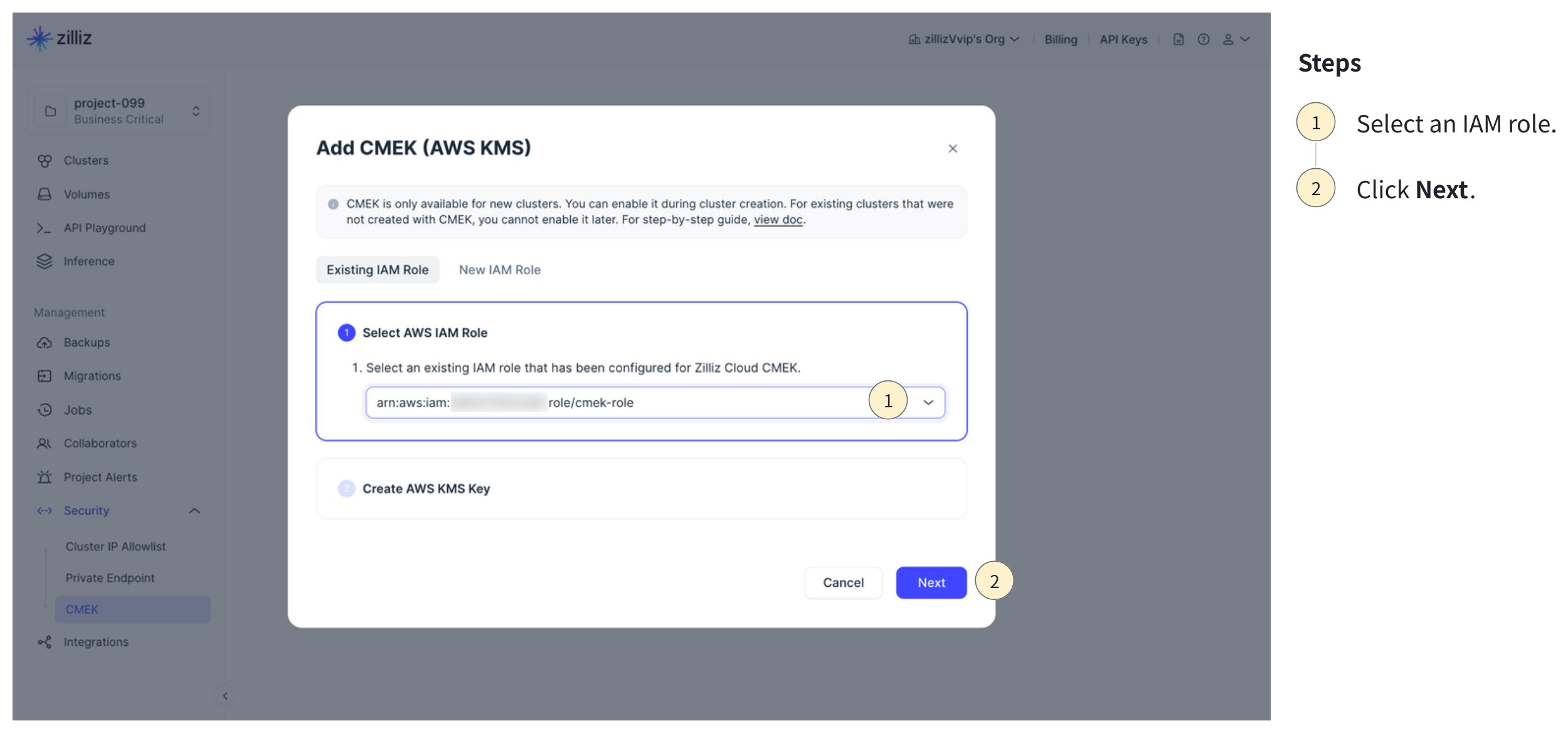
Existing IAM Role タブの Select AWS IAM Role のドロップダウンリストに必要な IAM ロールが含まれている場合は、このセクションの手順に従ってください。
Select AWS IAM Role ステップのドロップダウンをクリックし、IAM ロールを選択して、Next をクリックします。
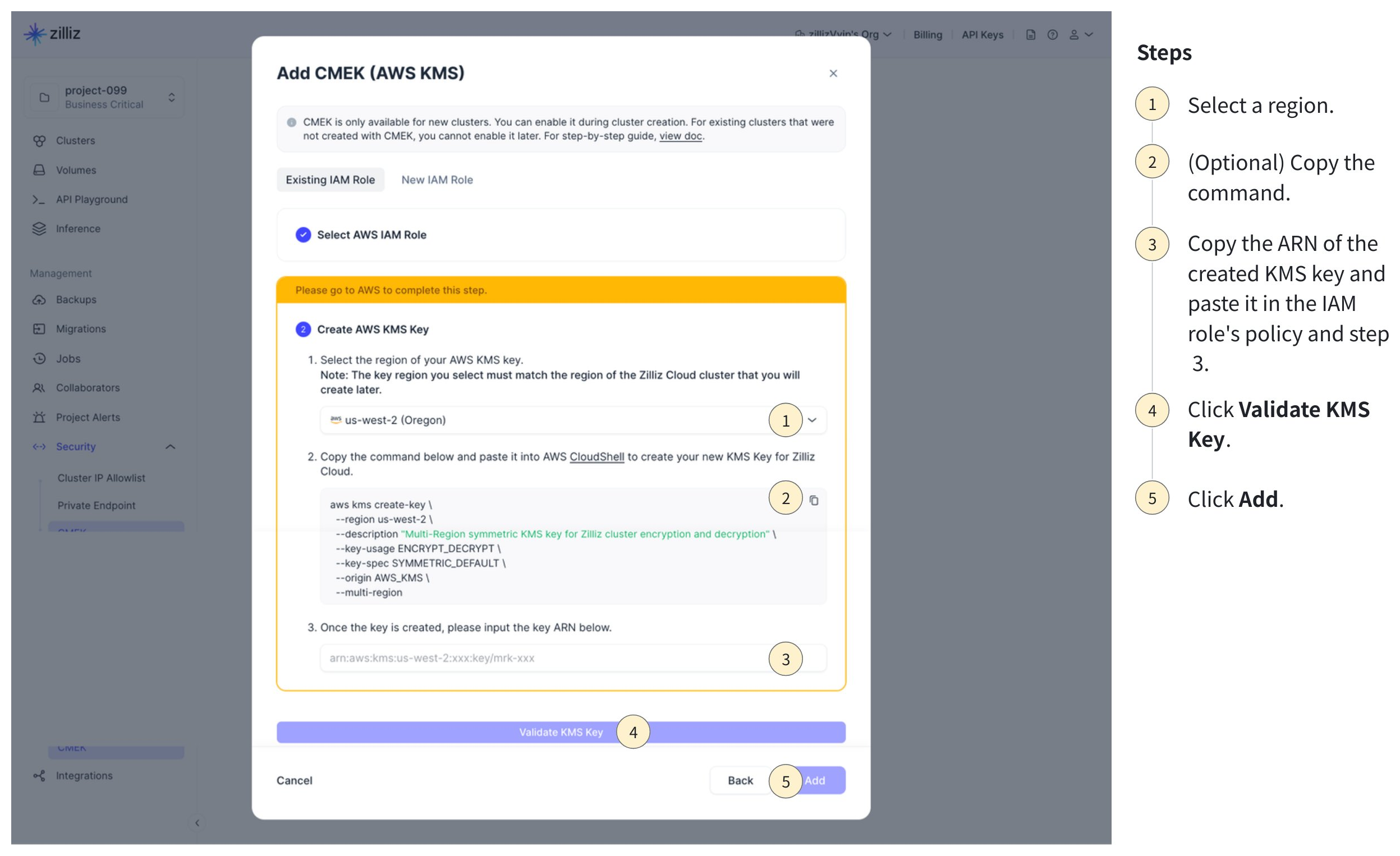
KMS キーを追加します。
-
ステップ 1 で対象のリージョンを選択します。
-
(オプション) ステップ 2 のコマンドをコピーし、AWS CloudShell で実行します。
このステップはオプションです。指定した IAM ロールで作成済みの KMS キーがすでにある場合は、このステップをスキップして次に進むことができます。これは、マルチリージョンレプリカキーを追加する場合に便利です。
Notes暗号化された Zilliz Cloud クラスターをあるクラウドリージョンから別のリージョンにバックアップした後、対象リージョンでバックアップを復号するには、元のクラスターを暗号化したのと同じキーを使用する必要があります。
この場合、キーをバックアップをホストするリージョンにレプリケートし、既存の IAM ロールを使用して Zilliz Cloud に送信できます。
マルチリージョンレプリカキーの作成の詳細については、AWS ドキュメントのこのページ を参照してください。
-
KMS キー ARN を次の場所にコピーして貼り付けます。
-
AWS コンソール 上の IAM ロールのポリシー。
ロール一覧でロールの名前をクリックし、Permissions タブでロールポリシーを見つけて、コピーした KMS キーを
Resourceノードに追加します。json{"Version": "2012-10-17","Statement": [{"Effect": "Allow","Action": ["kms:Decrypt","kms:Encrypt","kms:DescribeKey"],"Resource": ["arn:aws:kms:us-west-2:xxxx:key/mrk-...","PASTE-THE-COPIED-KEY-ARN-HERE"]}]} -
Zilliz Cloud の上記のダイアログボックスのステップ 3。
-
-
ダイアログボックス下部の Validate KMS Key をクリックします。
-
検証が成功したら、Add をクリックします。
新しいロールを使用して KMS キーを追加する
Existing IAM Role タブの Select AWS IAM Role のドロップダウンリストに必要な IAM ロールが含まれていない場合は、このセクションの手順に従ってください。
New IAM Role をクリックします。
IAM ロールを作成し、その信頼ポリシーに Zilliz Cloud を追加します。
Zilliz Cloud に一覧表示されている IAM ロールがない場合は作成します。これには、AWS CloudShell でコマンドを実行する必要があります。
-
Zilliz Cloud コンソールから信頼ポリシーのファイル名をコピーし、AWS CloudShell で
viコマンドを実行して信頼ポリシーファイルを作成します。bashvi role-trust-policy.json -
I を押して挿入モードに入ります。
-
Step 1 の信頼ポリシー JSON をコピーし、ターミナルに貼り付けます。
-
ESC を押して
:wqを入力し、JSON ファイルを保存します。 -
Step 2 で作成するロールの名前を入力します。
-
Step 3 のコマンドをコピーし、ターミナルに貼り付けます。
-
Enter を押してコマンドを実行します。
-
コマンド出力でロールの ARN をコピーし、Step 4 のテキストボックスに貼り付けます。
-
Next をクリックします。
KMS キーを作成します
-
Step 1 でクラウドリージョンを選択します。
-
Step 2 のコマンドをコピーし、ターミナルに貼り付けます。
-
Enter を押してコマンドを実行します。
-
コマンド出力でキーの ARN をコピーし、Step 3 のテキストボックスに貼り付けます。
-
Next をクリックします。
KMS キーを IAM ロールに関連付けます。
-
viコマンドを実行し、Step 1 で必要なロールポリシー JSON ファイルを作成します。 -
Step 2 のコマンドをコピーし、ターミナルに貼り付けます。
-
Enter を押してコマンドを実行します。
-
コマンドが実行されたら、ダイアログボックス下部の Validate KMS Key をクリックします。
-
検証が成功したら、Add をクリックします。
KMS キーを使用して Zilliz Cloud クラスターを暗号化すると、クラスターは 10 分ごとにキーの可用性を確認します。キーが利用可能であることを検出した後にのみ、使用可能になります。
AWS KMS キーを管理する
追加した AWS KMS キーは、Zilliz Cloud コンソールで確認できます。
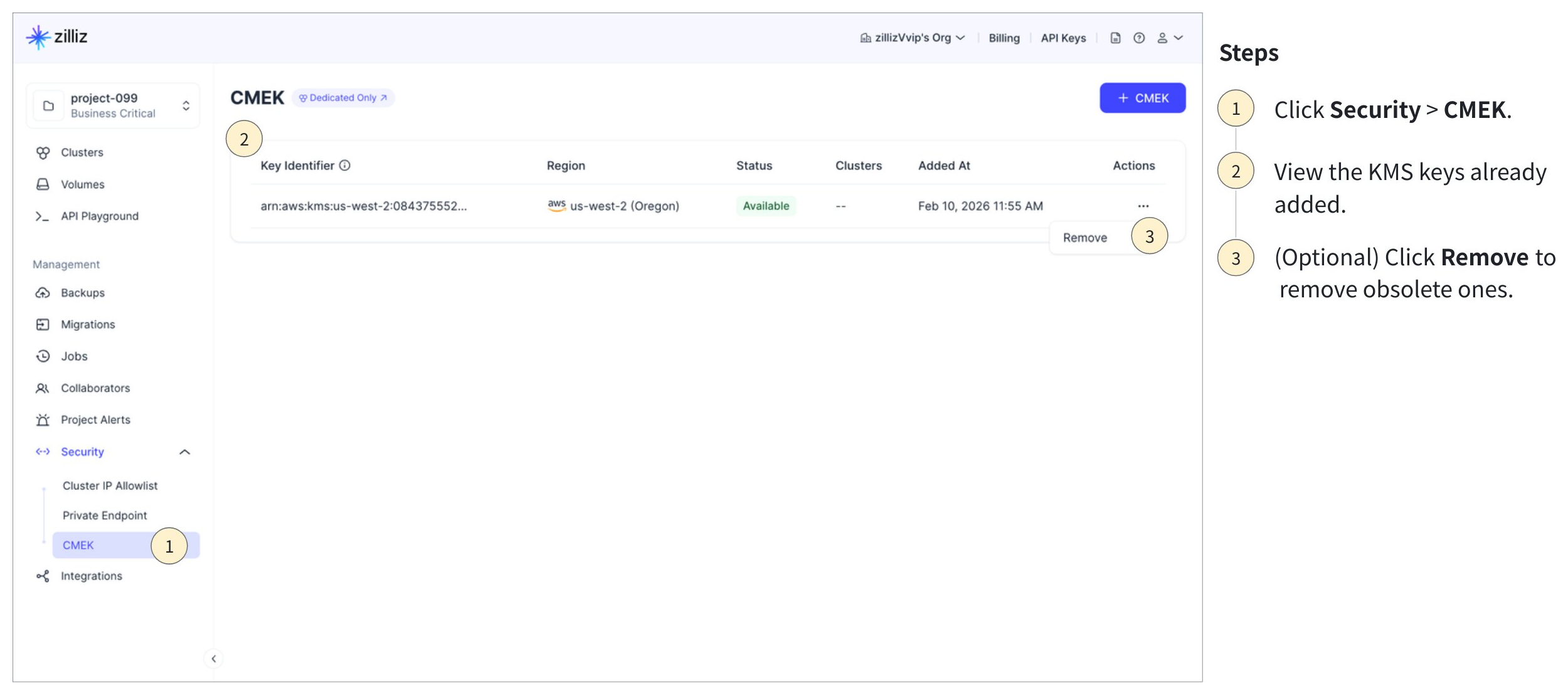
Zilliz Cloud は、一覧表示されているキーの可用性を 10 分ごとにスキャンします。また、一覧表示されている KMS キーのステータスに関するプロジェクトアラートを作成することもできます。詳細については、Manage Project Alerts を参照してください。
KMS キーが不要になった場合は、どのクラスターもそのキーを使用していなければ削除できます。
AWS KMS キーを使用する
KMS キーを Zilliz Cloud に追加すると、それを使用して暗号化されたクラスターを作成し、バックアップおよび復元できます。
暗号化されたクラスターを作成する
クラスターを暗号化するには、作成するクラスターのリージョンで利用可能な KMS キーを選択できます。
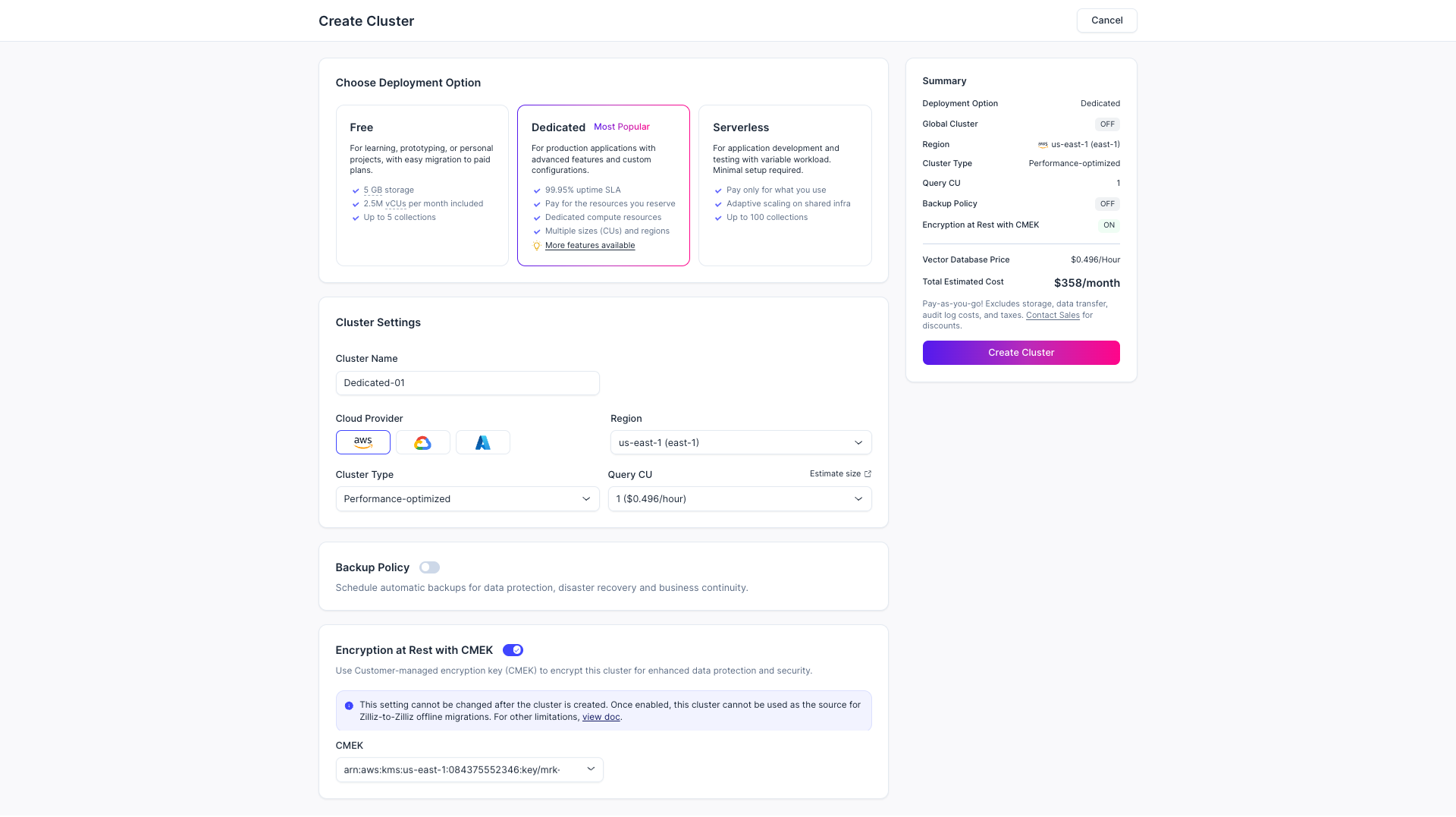
KMS キーを追加すると、次のようにして暗号化されたクラスターを作成できます。
Choose Deployment Option セクションで Dedicated をクリックします。
クラスターのクラウドプロバイダーとリージョンを選択します。
Encryption at Rest with CMEK を有効にし、既存の KMS キーを選択します。作成するクラスターと同じリージョンにある KMS キーのみを選択できます。
概要を確認して、Create Cluster をクリックします。
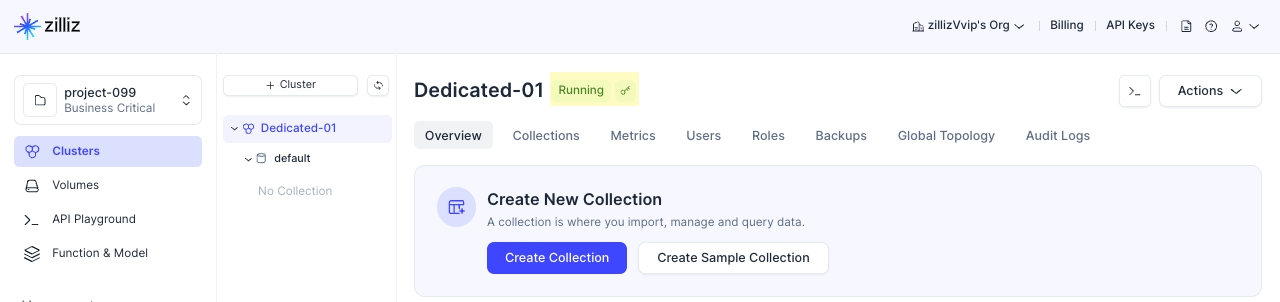
暗号化されたクラスターの Overview ページでは、上の図に示すように、クラスター名の右側にキーアイコンが表示されます。暗号化されたクラスターで作成されたすべてのコレクションは、デフォルトで暗号化されます。
暗号化されたバックアップファイルから復元する
暗号化されたバックアップを新しいクラスターに復元する場合、Zilliz Cloud はバックアップファイルに関連付けられた KMS キーを使用して、復元する前にデータを復号します。そのため、暗号化の有無にかかわらず、バックアップを新しいクラスターに復元できます。
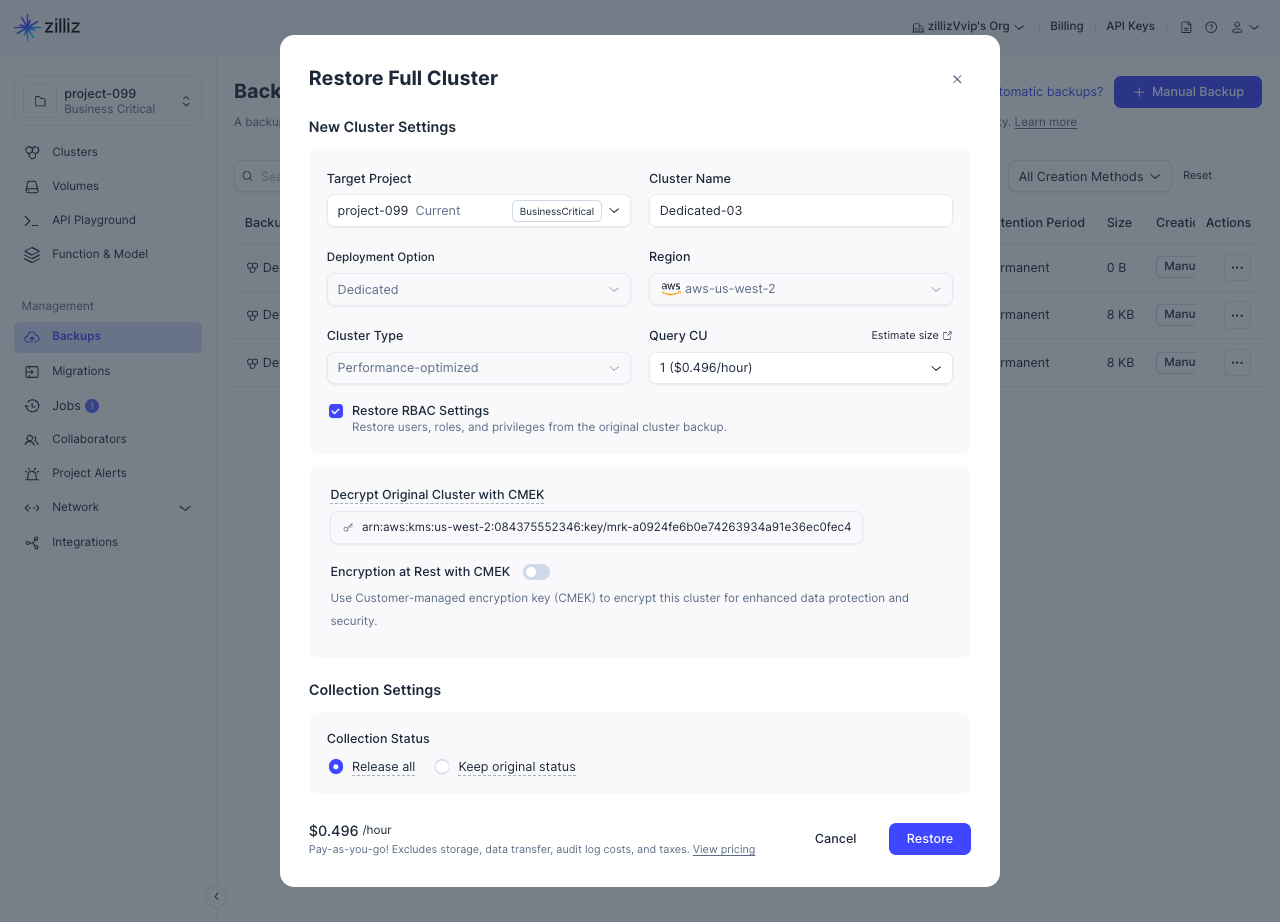
暗号化されたバックアップからの復元手順は、Encryption at Rest with CMEK を有効にするかどうかを除いて、通常の復元とほぼ同じです。

-
このオプションを有効にすると、復元後に作成されるクラスターは、以下で指定した KMS キーを使用して暗号化されます。
-
このオプションを無効にすると、復元後に作成されるクラスターは暗号化されません。